The Beginnings
In 1959, Sir John Gielgud saw 17-year-old Sarah perform at RADA’S Vanbrugh theatre, and promptly cast her in ‘Dazzling Prospect’, the West End play he was directing. She starred with the beloved Margaret Rutherford.
Weekly repertory at Worthing followed, playing different leads every week. Hard work and discipline taught Sarah a lot more about acting than RADA ever did. Worthing Rep was one of the happiest periods of her life, helped by full houses.
While still there, she auditioned with more than thirty other girls for the lead in a film, ‘Term of Trial’ opposite Laurence Olivier. She was offered the role, but only if she agreed to dye her hair blond.
She had just dyed it dark brown, and had it straightened at a time when the most primitive straightening methods were being used, and which caused clumps of her hair to fall out.
“It’s possible to be a brunette and sexy, you know,” she pleaded. Olivier butted in: “Ha! I’d cut off my right hand for a part like that!”
“Oooh! Captain Hook and the new bald look!” she quipped. “Wouldn’t we make a romantic pair?” Icy silence followed.
Sarah was shown the door with that cold cliche: “We’ll let you know.” She cried all the way back to Worthing Rep.
But two weeks later her agent, Robin Fox, rang. “Congratulations darling,” he said. “They say you can wear a wig!”
Blow Up
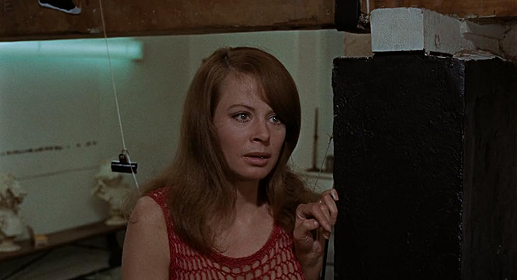
Sarah was one of the stars of the 1966 psychological thriller ‘Blowup’, directed by Michelangelo Antonioni, and produced by Carlo Ponti. It was Antonioni’s first entirely English-language film and starred Sarah, David Hemmings, and Vanessa Redgrave.
Set in the swinging London of the ‘60s, and featuring explicit sexual content, the film follows a fashion photographer played by Hemmings, who believes he has unwittingly captured a murder on film. ‘Blowup’ won the Palme d’Or, the highest honour at the 1967 Cannes Film Festival, and at the Academy Awards was nominated for Best Director and Best Original Screenplay.
Ryan’s Daughter
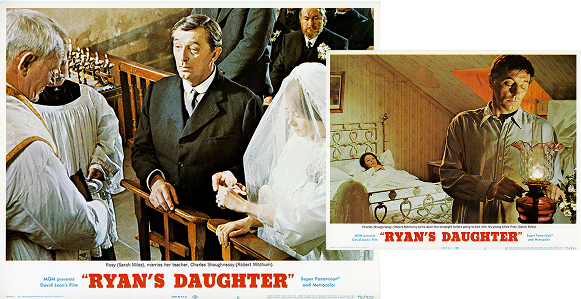
The epic romantic drama film, ‘Ryan’s Daughter’ was written by Sarah’s husband Robert Bolt and directed by David Lean.
Sarah starred alongside Robert Mitchum. The supporting cast featured John Mills, Trevor Howard and Leo McKern.
The film told the story of a married Irish woman who has an affair with a British officer during World War I at a time of Irish uprisings against British control.
It was one of the highest-grossing movies of 1970, and nominated for four Academy Awards including Sarah’s performance in the Best Actress category.
Death at Gila Bend
In 1973, while making “The Man Who Loved Cat Dancing,’” opposite Burt Reynolds, in Gila Bend, Arizona, Sarah found her business manager , David Whiting, dead on her bathroom floor at theTravelodge Motel. The pair had an altercation in the early hours of the morning, and Sarah had called out to Burt Reynolds to rescue her. She spent the following hours in Reynolds’s motel room.
At 11 a.m. the next day she found Whiting dead in her room. He had suffered a severe head injury and she claimed that a boot spur had caused a huge wound in the middle of his back. Sarah said Whiting had never set foot in her bathroom before, and suspected he had been planted there. MGM protested about Sarah and Burt Reynolds giving evidence at an inquest, claiming it would cause delays in production.
The head of MGM, Jim Aubrey, known as ‘Snake-Eyes’, flew across from Los Angeles and knocked on her motel room door.
Aubrey was renowned for doing his own dirty work, and there he was, standing at Sarah’s door with a seriously rotund lawyer, both reminding her of Laurel and Hardy.
Aubrey sat her down, and with his icy ‘Snake -Eyes’ glaring at her, told her: “You’d better follow the party line little lady, else you’ll never work again. Oh, an’ watch out for yourself … an’ watch out for your family.”
Sarah was afraid she would be blamed for Whiting’s death. She kept imagining members of her family as road kill, or thrown off a building, or skilfully suicided. Shamefully, she says, she sank into cowardice, and did whatever the MGM boss said. Whiting’s death was ruled a drug overdose and his head wound blamed on him falling as he passed out. Sarah had other ideas about what happened. She says she had nothing to do with his death but knows who did.
And she adds that Burt Reynolds was the hottest property in Hollywood at the time, having signed a deal with MGM worth millions. MGM had to protect him at all costs.
The Sailor Who Fell From Grace With The Sea
The scandal over the death at Gila Bend ended Sarah’s first marriage to Robert Bolt, and even though she never revealed her suspicions about what really happened to David Whiting, she feared she had been blacklisted from major projects.
She received no more work through her agents for many years and says her roles only came from chance meetings with directors and producers.
Martin Poll was the producer of ‘The Man Who Loved Cat Dancing’. Sarah claims he knew what really happened to David Whiting, too, and perhaps out of guilt over the way she was treated by Jim Aubrey finally offered her another major role. She became the female lead opposite Kris Kristofferson in his adaptation of Yokio Mishima’s classic novel, ‘The Sailor Who Fell from Grace with the Sea’.
It was to be shot in Dartmouth, Devon.
Sarah had to perform the most personal, most vulnerable scene of her acting career.
Her challenge was to shine a truthful light on the loneliness depicted in a woman’s private moments, as she pleasures herself within the safety of her bedroom, her inner sanctum.
She wanted to reach up high enough into Mishima’s beautiful novel to become worthy of its haunting descriptive passages and bring some erotic, lonely elegance to that taboo subject matter, never touched upon on film back then.
It required all the fearlessness and inner strength that she could muster.
The depth of her own vulnerability in the run up to filming such subject matter caused her to stop eating for three days.
Yet once she saw herself on the screen the next evening, watching rushes, (dailies), all the fear, lack of hunger and aloneness she had experienced during shooting, evaporated, because she had done astonishing work.
Escaping The Casting Couch
Sarah reunited with her ex-husband Robert Bolt in the 1980s and planned to remarry him.
Following the success of the films ‘White Mischief’ and ‘Hope and Glory’ in 1987, she was at a charity dinner with the iconic stage director Peter Hall at her table. He pleaded with Sarah to play his ‘Imogen’ in his new National Theatre production of Shakespeare’s ‘Cymbeline’.
Sarah made him audition her first because he was renowned for demanding his plays being performed his way.
She said he loved her audition, and went on and on about it. During rehearsals Hall flirted with her outrageously, though, and she said that was the case for many actresses who worked with him at the National Theatre.
Sarah later claimed that Hall was also having a relationship with his publicist at the time, and also directing his opera singing wife, Maria Ewing, in the first naked ‘Salome’ production at the Royal Opera House.
She said ‘Cymbeline ‘was going as well as could be expected, considering Hall rarely showed up to rehearsals, due to his wife finding nakedness a “trifle tricky” at the Royal Opera House.
He never gave Sarah notes on direction whatsoever, just flirted with her.
One day, with almost six weeks of rehearsal still to go before opening, Sarah was told that Peter wanted to talk to her in his office.
As soon as she arrived, he was all over her like a rash, and she had to fight – really fight – her way out from beneath him. She scurried to the door and clumsily said as she left: “There seems to be some mistake.”
Peter was an old friend of Robert Bolt and knew he and Sarah were marrying for the second time the following Saturday in Hammersmith Church.
The day after the wedding was the sunniest, rarest blue day ever. Peter Hall rang around noon.
“Oh, Hello Peter, have you noticed what a special blue the sky is today?” Sarah asked, full of fresh, married bliss.
“You are no longer my Imogen, you’re fired,” he grumbled before hanging up. He told the media Sarah wasn’t up to performing in the theatre. He really went to town, and it was headline news everywhere.
Sarah was never offered anything worthy on the stage again and only occasionally appeared in television roles.